
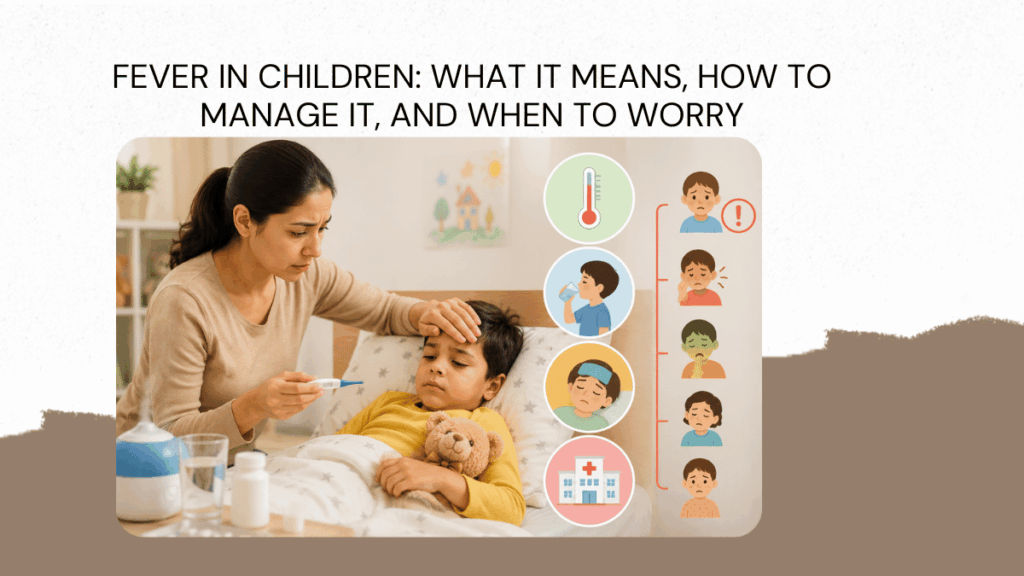
Fever is one of the most common reasons parents bring their child to see me, and also one of the most misunderstood. A fever itself is not the illness. It is the body’s normal response to fighting an infection, and in most children it settles on its own with simple care at home. As a paediatrician in Guwahati, I want families to feel confident managing fever at home and clear about when it is time to seek help. .
What actually causes a fever?
A fever occurs when the body’s internal temperature regulation rises above the normal range, usually in response to an infection, most commonly viral. This rise in temperature is part of the immune system’s defence, making it harder for certain viruses and bacteria to multiply. A fever in children in isolation, especially in an otherwise alert and active child, is rarely dangerous by itself.
At what temperature should parents actually be concerned?
A temperature above 38 degrees Celsius is generally considered a fever, but the number on the thermometer matters less than how the child looks and behaves alongside it. A child with a temperature of 39 degrees who is playing, drinking fluids, and alert is very different from a child with the same temperature who is lethargic, refusing fluids, or difficult to console. I always ask parents to watch the whole child, not just the thermometer reading.
How should a fever be managed at home?
Keeping the child hydrated is the most important step, since fever increases fluid loss and dehydration is often what makes a child feel genuinely unwell. Light clothing and a comfortable room temperature help the body regulate itself, rather than over-bundling the child. Paracetamol or ibuprofen, dosed appropriately for the child’s weight, can be used to ease discomfort, though the goal is comfort rather than chasing a specific number on the thermometer. Tepid sponging and rest support recovery alongside these measures.
When does a fever need urgent medical attention?
Certain signs mean a fever should be assessed promptly rather than managed at home. These include a fever in an infant under three months of age, a fever lasting more than three to five days, difficulty breathing, a rash that does not fade when pressed, persistent vomiting, signs of dehydration in children such as a dry mouth or reduced urination, extreme lethargy or difficulty waking the child, or a febrile seizure. Any of these warrants an evaluation rather than waiting to see if the fever settles.
Why do some children get fevers so often?
Frequent fevers are usually a reflection of the number of viral infections circulating in daycare or school settings, particularly in younger children whose immune systems are still building familiarity with common viruses. This is generally a normal part of childhood rather than a sign of weak immunity. A pattern worth discussing with your paediatrician in Guwahati Assam is fevers that consistently follow a specific cause, last unusually long, or are accompanied by other recurring symptoms.
If your child has a persistent fever, recurrent infections, or symptoms that concern you, timely evaluation can help identify the cause and ensure appropriate treatment.

Great content! Keep up the good work!
Hi there,
Thank you so much for the kind words and encouragement! We are thrilled to hear that you found the content helpful.
Providing valuable and reliable information for parents and families is exactly what we aim for. Stay tuned for more updates, and feel free to reach out if you ever have any questions!
Warm regards,
The IHR Guwahati Team
I got what you intend, appreciate it for putting up.Woh I am happy to find this website through google.
Hi Linda,
Thank you so much for taking the time to read our post and for leaving your feedback! We’re thrilled that you found our website through Google and that the information was helpful to you.
Stay tuned for more helpful guides and updates, and feel free to reach out if you ever have any questions!
Warm regards,
The IHR Guwahati Team
I admire your work, thankyou for all the good articles.
Hi there, Thank you so much for taking the time to read our article and for leaving such kind and encouraging feedback! We’re thrilled to hear that you enjoyed our content and that it offered a useful perspective on the topic. Providing clear, high-quality, and insightful information is always our top goal. Stay tuned for more updates, and feel free to reach out anytime if you have any questions!
Warm regards,
The IHR Guwahati Team
It’s always more about how they’re acting and their energy levels than just the actual number on the thermometer.
Thank you so much for your kind words! We’re thrilled that the information was helpful to you. Have a great day!
Best regards,
The IHR Guwahati Team