Sperm Retrieval for Male Infertility Treatment

At the Institute of Human Reproduction (IHR), Guwahati, we offer advanced sperm retrieval techniques to support individuals and couples dealing with male infertility. These procedures are designed to obtain sperm in situations where it is not available in the ejaculate or cannot be collected through conventional methods.

What Is Sperm Retrieval?

Sperm retrieval refers to a variety of medical techniques used to collect sperm from the male reproductive tract. These methods are often employed in cases of azoospermia, ejaculatory dysfunction, or where natural ejaculation is not possible.

The retrieved sperm is typically used in assisted reproductive techniques like IVF (In Vitro Fertilization) or ICSI (Intracytoplasmic Sperm Injection).

When Is Sperm Retrieval Recommended?

a. Situational anejaculation

One of the most common causes of anejaculation is situational anejaculation. When a man can ejaculate in some situations but not in others. Frequently, this type of anejaculation is caused by stress in situations such as being in the fertility clinic where some men become tense when they know they have to give a semen sample “on-demand”. The man is otherwise normally able to ejaculate.

These patients usually respond to Counselling and Relaxation. If this doesn’t work :

We can give some medications such as Viagra (Sildenafil) or similar tablet.

The patient can go for a home collection if the home is nearby.

The patient can go for penile vibrator stimulation (PVS) which are available in our clinics. (A special vibrator placed at the tip of the penis. This stimulation can cause an ejaculation)

b. Complete anejaculation

When a man is never able to ejaculate semen either during intercourse or by masturbation, at home or in the clinic. These patients require detailed evaluation and treatment is offered accordingly.

c. Retrograde ejaculation

Retrograde ejaculation occurs when semen goes into the urinary bladder instead of leaving the penis during ejaculation. Retrograde ejaculation isn’t harmful but it can impair fertility since it affects the delivery of sperm to the vagina during intercourse. The condition is relatively uncommon, accounting for only 0.3% – 2% of male fertility problems. Immediately after ejaculation, the urine is examined and the presence and absence of the sperm in the urine are evaluated to diagnose it.

d. Azoospermia

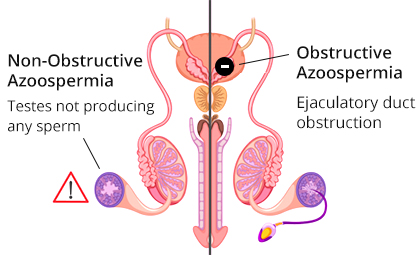
The patient is able to ejaculate but there is no sperm (even under a microscope) in multiple raw samples even after high-speed centrifugation. Azoospermia can be either due to :

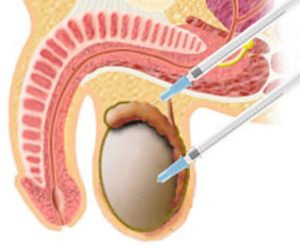
In these cases, sperm can be tried to obtain through various surgical techniques from the testis. These include:

Microsurgical Testicular Sperm Extraction (Micro-TESE)