
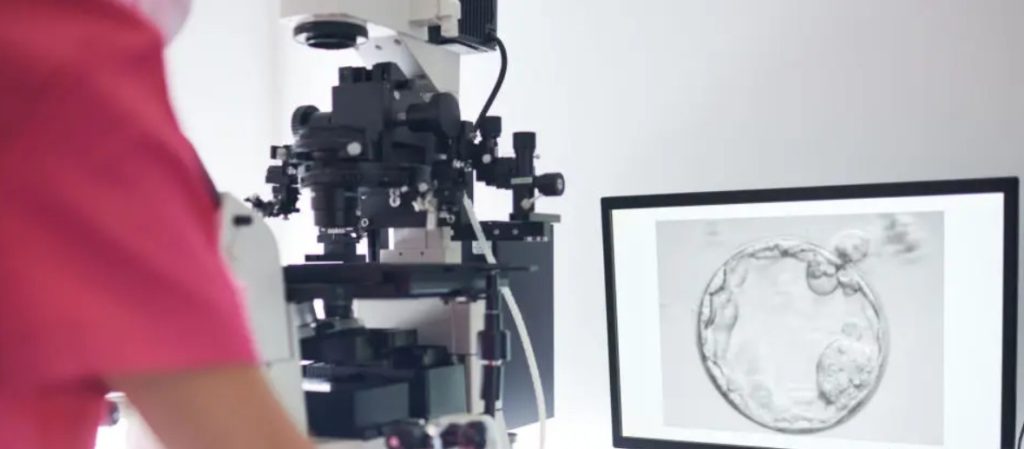

Many different factors could affect your fertility. There are various screening tests that can be done to evaluate fertility. We offer both fertility assessments and tests for men and women.
By looking at things like your health, medical history and lifestyle, our female fertility tests allow us to assess your individual situation and, if needed, decide on the best way to help.
At your assessment we’ll look at both your general and fertility health and take you through a few key tests.
During your assessment, we’ll evaluate the following :

Your lifestyle can make a big difference to your fertility. Your doctor or nurse might suggest changes to your exercise or diet to help you get in the best possible shape for your journey with IHR.

We'll take note of any existing medical conditions, including your gynaecological history, and explore any known problems that could be relevant. We might suggest further tests or make other recommendations based on our findings.
Body mass index (BMI) directly influences fertility—both underweight and overweight conditions may impact ovulation and cycle regularity.
Your general health is closely linked to your fertility health, so we’ll be checking to make sure your blood pressure is within the recommended guidelines.
Routine Blood Test
Virology Test
Rubella test ( to measure rubella antibodies in your blood).
Serum Anti-Mullerian hormone (AMH).
Other Hormone’s test.
Routine Urine Test
Urine culture and sensitivity Test ( if required)
HSG is the procedure to check tubal patency, in other words, if your Fallopian tubes are open, and that there aren’t any blockages.
This type of ultrasound, also known as a 3D trans-vaginal pelvic ultrasound scan, helps us:
- to get a much clearer picture of your womb, ovaries, and pelvis.
- to check the quality of your womb lining – the endometrium
- to measure Ovarian volume
- to measure Antral Follicle Count (AFC) which along - with AMH is used as an indicator of Ovarian Reserve, and can give us a better idea of how you might respond to treatment.
By testing your semen, screening for infection, and examining your lifestyle, our fertility tests for men allow us to assess your individual situation and, if needed, decide on the best way to help.
At your assessment we’ll look at both your general and fertility health and take you through a few key tests.

We'll take note of any existing medical conditions and explore any known problems that could be relevant. We might suggest further tests or make other recommendations based on our findings.

Your lifestyle can make a big difference to your fertility. Your doctor or nurse might suggest changes to your exercise or diet to help you get in the best possible shape for your journey with care.

Studies show that if your body mass index (BMI) puts you in the underweight, overweight or obese categories, this could be affecting your fertility.

Your general health is closely linked to your fertility health, so we’ll be checking to make sure your blood pressure is within the recommended guidelines.

Routine Blood Test
Virology Test
Hormone's Test
Routine Urine Test
Urine culture and sensitivity Test ( if required)
Ultrasound of scotum is done in rare cases.
Our scientists will examine your semen sample for sperm, measuring the number, shape and movement amongst other things. Depending on what we find, we might recommend some more tests. You can learn more about semen analysis here.
Copyright 2022 © IHR Guwahati. All Right Reserved.