Hysteroscopy

  1. Home
  2. »
  3. Hysteroscopy

What is Hysteroscopy?

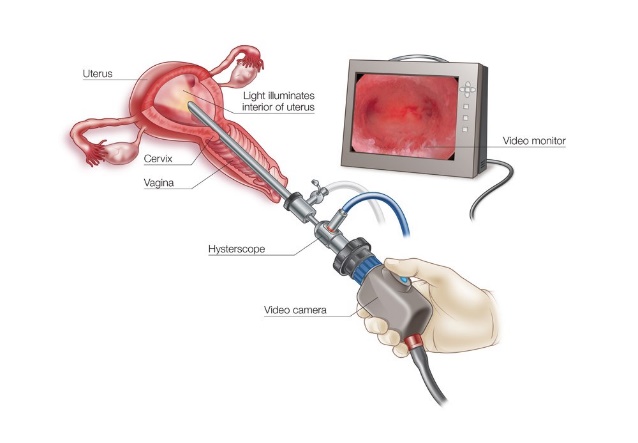
A hysteroscopy is a minimally invasive procedure that allows doctors to inspect the inside of
the uterus using a thin telescope called a hysteroscope. It helps diagnose and treat issues
like abnormal bleeding, uterine growth, or fertility-related concerns.

A hysteroscopy is a procedure to look inside the womb (uterus) to check and treat for any
problems. A hysteroscopy is done with a narrow tube-like telescope (Hysteroscope) with a
camera.

Who needs it (Indications)?

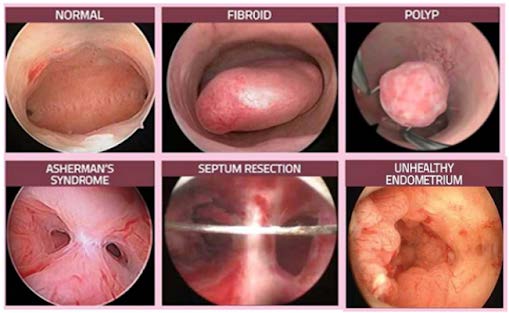
Your doctor may advise you Hysteroscopy for any of the following reasons:
How to prepare for the procedure?

  1. You will be mostly scheduled to have the procedure after your periods and before ovulation. This lets your gynaecologist get the best view of the uterus. It also avoids harm to a new pregnancy.
  2. Your doctor will advise a few basic blood tests to check your overall fitness for the procedure.
    • ✔️ Tell your healthcare provider if you are sensitive to or are allergic to any medicines, iodine, latex, or anesthesia.
    • ✔️ Tell your healthcare provider of all medicines (prescription and over-the-counter) and herbal supplements that you are taking.
    • ✔️ Tell your doctor if you have a history of bleeding disorders or if you are taking any blood-thinning medicines (anticoagulants), aspirin, or other medicines that affect blood clotting. You may be told to stop these medicines before the procedure.
    • ✔️ Follow any other instructions your provider gives you to get ready.
  3. You should be in a fasting state for at least six (6) hours before the procedure as it may be done under general anaesthesia.

What happens during the procedure?

  1. Hysteroscopy is usually done under general anaesthesia. This means you’ll be asleep during the operation.
  2. The procedure usually takes about 10 to 15 minutes depending on what you are having it for, but you will have to be under observation till the anaesthesia effect wears off.
  3. You will be positioned on an operating table.
  4. The vaginal area will be cleaned with an antiseptic solution.
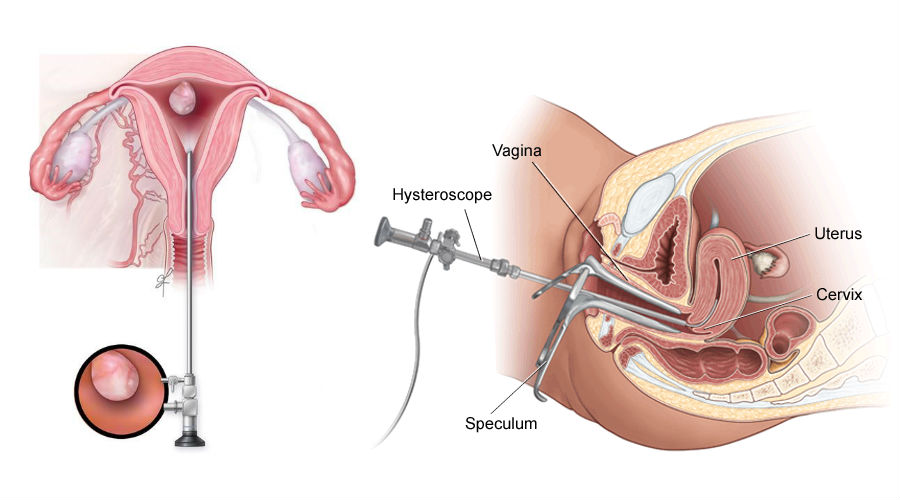
  5. Your doctor may dilate your cervix before inserting the hysteroscope. With the 2.9 mm hysteroscope available at IHR, there is usually no need to dilate the cervix, which gives better comfort to our patients.
  6. The hysteroscope is inserted into the vagina, through the cervix, and into the uterus.
  7. Sterile fluid, such as saline water, will be put through the hysteroscope into your uterus to expand it. The fluid helps your doctor see the inside of the uterus more clearly. The amount of fluid used is carefully checked throughout the procedure.
  8. A camera on the hysteroscope sends pictures of the inside of your womb and the openings of the fallopian tubes to a monitor where your doctor can see it.
  9. They’ll observe these images to find out the problem and will do the treatment that’s needed.

What to expect during recovery?

What are the associated risks?

Most women don’t have any problems after having a hysteroscopy. But contact your doctor or visit the emergency department of your local hospital if you have:

These complications, which are all very rare, include:

Why Choose IHR Guwahati

👩‍⚕️ Experienced gynecologists and nurses dedicated to patient comfort

🩺 Slim hysteroscopes for gentler, less invasive procedures

🏥 Full spectrum of diagnostic and operative care under one roof

🔒 Emphasis on safety, hygiene, and informed patient communication